
Tough Love About How to Fill Your Caseload (From an Ex Marketing Leader Turned Therapist-in-Training)
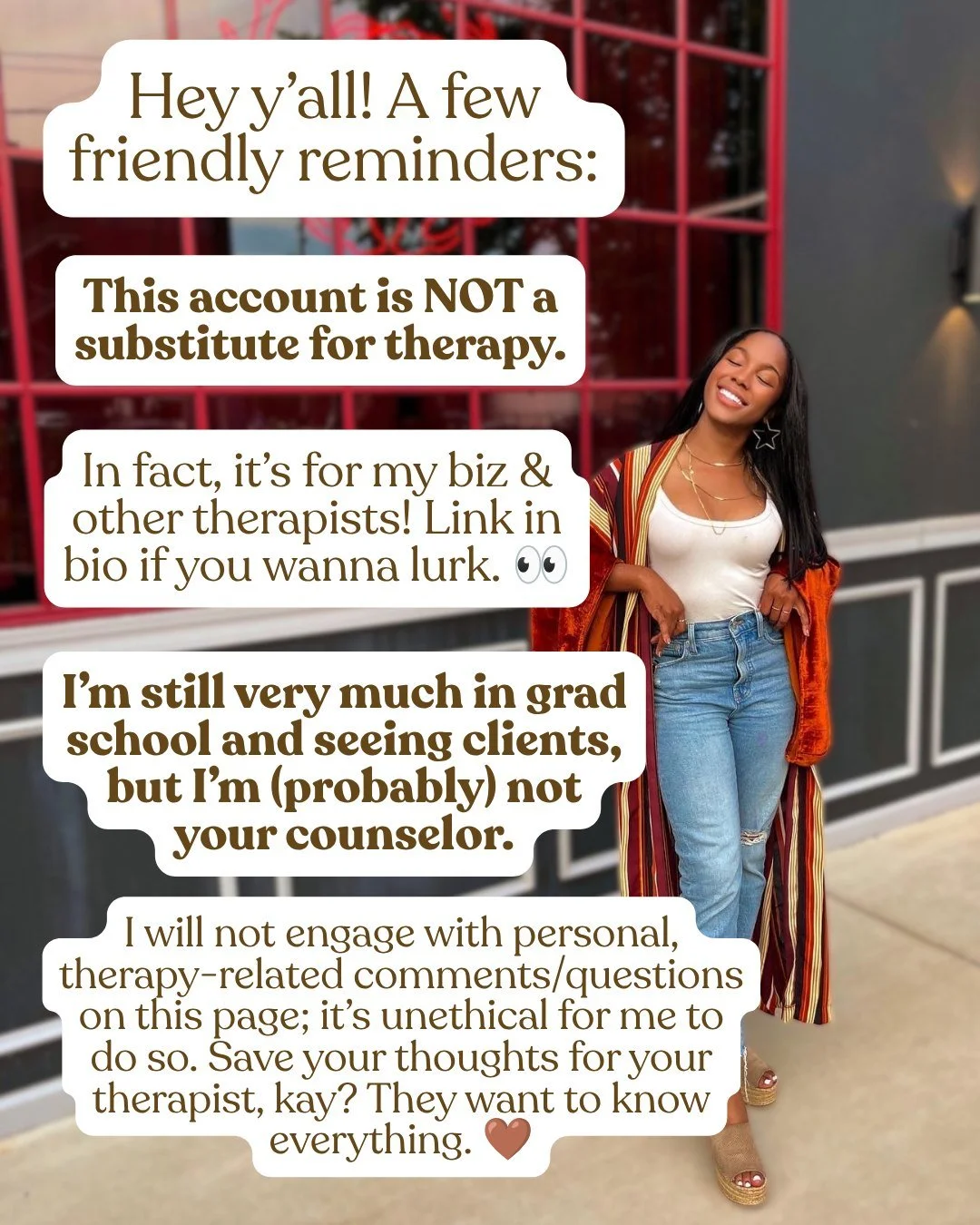
I'm a former corporate marketing leader, currently a grad student in a counseling program — not a therapist, not pre-licensed, just someone with one foot in each world — and I've seen enough therapist websites and social media profiles to say this with some confidence: a lot of what you've been told about marketing your practice is either outdated, oversimplified, or just flat out wrong.
Your Website Sounds Like Everyone Else's. That's a Problem.
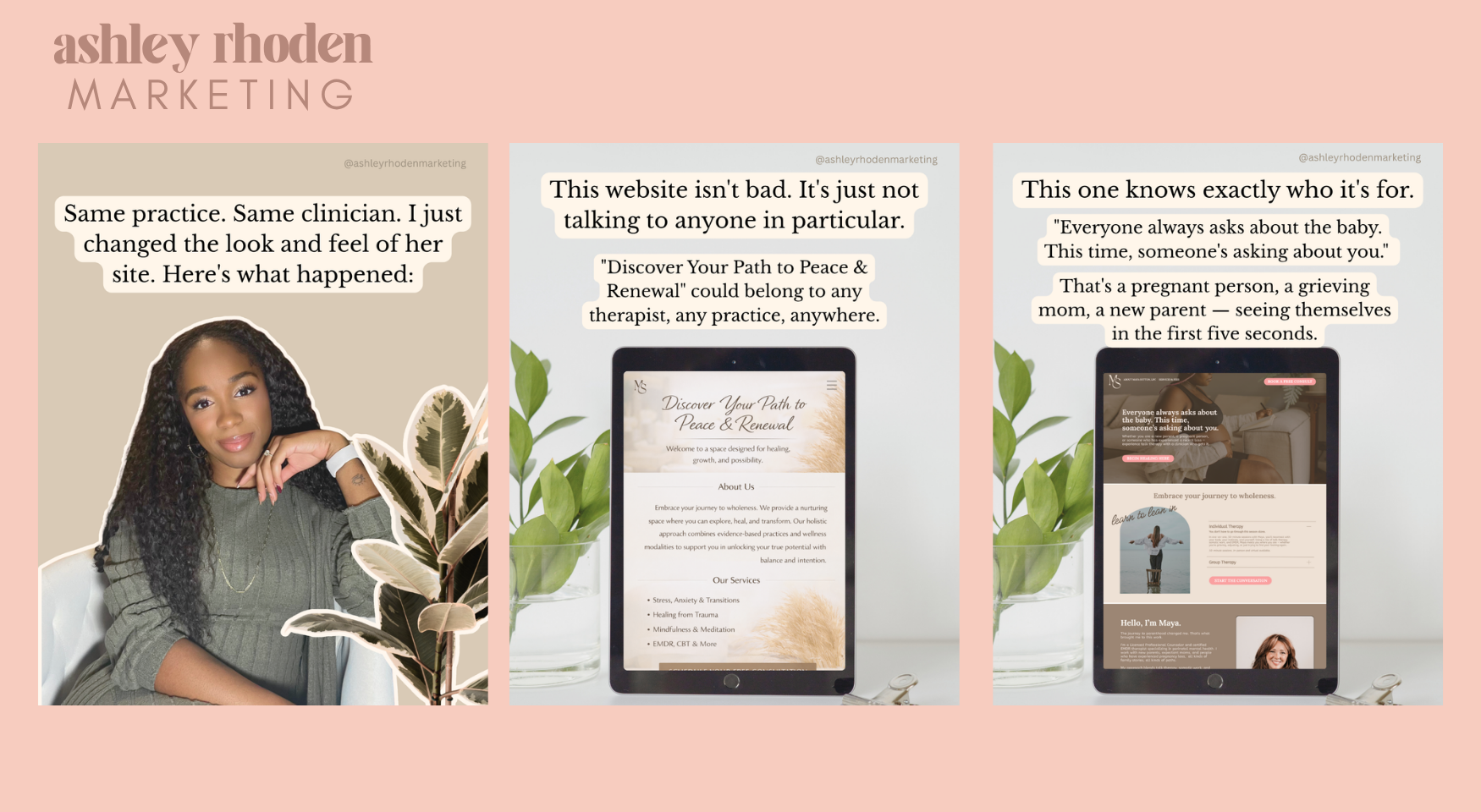
If I'm reviewing your website and it sounds like anyone could have written it for their own practice, it's time for a rewrite.
"I provide a warm, supportive space for individuals navigating life's challenges."
I know you mean it. I believe you. But so does every other therapist within a 30-mile radius, and their website says basically the same thing.
Here's the thing: simplicity helps in session, especially with dysregulated clients. But on your website, vagueness isn't safety. It's invisibility.
Specificity and clarity are a much stronger bet when you're trying to fill your books. Your web presence should feel as unique as your sessions do. Name your specialties. Name your approach. Name the kind of client who will thrive working with you. The right person will feel found. The wrong person will self-select out, and they’ll be one step closer to finding their perfect match.
The Algorithm Could Not Care Less About Daily Posts.
Let's talk about social media for a second, because there's a lot of noise out there about consistency and posting frequency that I want to push back on.
If you're a new account: it takes time for the algorithm to learn which bucket you fall in. During that period, do not internalize likes. Do not obsess over reach. And please, stop updating your handle name every few months! It confuses both the algorithm and the humans trying to find you.
If you're a seasoned account: get specific. Say what only you can say. You don't need to post six times a week. Two to three posts per week minimum, paired with genuine engagement — think six thoughtful comments on different accounts daily — will do more for your visibility than daily posts that say nothing new.
And if you're pre-licensed or fully licensed: don't forget to add a "this is not therapy" disclaimer to your captions. Protect yourself and your future clients.
Your Website Can't Do Everything. Stop Asking It To.
Here's a mindset shift that might sting a little: you cannot expect your website to be the only place you prove you're a skilled, progressive, thoughtful clinician.
Especially when it comes to values-forward language — identity-first versus diagnosis-first, trauma-informed care, cultural humility — everything has a place depending on who you ask. Different audiences, different platforms, different conversations.
Instead of trying to nail every nuance in one place, diversify. Podcasts. Speaking engagements. Social media. Blog posts. Show up in multiple places, consistently, and always be teachable. Your website is one piece of the puzzle, not the whole picture.
What Actually Fills a Caseload
It's not going viral. It's not the perfect website copy (though that helps). It's not cracking some algorithm secret.
It's being specific enough that the right people recognize themselves in your work. It's showing up consistently enough that when someone is finally ready to reach out, your name is already familiar. It's making the path from "I found you" to "I booked a consult" as frictionless as possible.
Early career therapists can't afford to wait on referrals alone. Seasoned therapists are still losing roughly 35% of their income to insurance reimbursements. (Source: Heard, 2025; ACA, 2024) The pressure to build a sustainable private pay caseload is real — and visibility is part of how you get there.
You don't have to become a marketer. You just have to be findable, specific, and consistent enough that the people who need you can actually find their way to you.
Learn more about what a great therapist actually looks like — with two real examples.
Ashley Rhoden is a former corporate marketing leader turned strategist and website designer who works with therapists and private practice owners ready to stop being invisible online. She's also a grad student in a counseling program — not a therapist, not pre-licensed, just someone who understands this world from both the marketing side and the inside of a counseling program, and brings both to every website she builds.
Work with her to build a website that’s as unique as your sessions are. →
SOURCES
Heard. 2026 Financial State of Private Practice Report (surveying 2025 data). https://www.joinheard.com/resources/downloads/the-heard-2026-financial-state-of-private-practice-report